Navigation Menu
Home
University Admissions
Public Sector
Private Sector
Admissions in Punjab
Admissions in KPK
Admissions in Sindh
Admissions in Balochistan
Admissions in AJK
Global Scholarships
Scholarships in USA
Scholarships in UK
Scholarships in Canada
Scholarships in Australia
Scholarships in Europe
Scholarships in Asia
Scholarships in Africa
Medical Colleges
Public Sector
Private Sector
Semi-Govt (NUMS)
Online Quiz
MDCAT Past Papers
MDCAT Practice Test
AFNS Intelligence Test
ISSB Intelligence Test
Blog
Latest Notices
Menu
Pak
Admissions
Home
All Open Admissions
Public Sector
Private Sector
Admissions in Punjab
Admissions in KPK
Admissions in Sindh
Admissions in Balochistan
Admissions in AJK
Scholarships
Scholarships in USA
Scholarships in UK
Scholarships in Canada
Scholarships in Australia
Scholarships in Europe
Scholarships in Asia
Scholarships in Africa
Medical and Dental Colleges
Public Sector
Private Sector
Semi-Govt (NUMS)
Online Quiz
MDCAT Past Papers
MDCAT Practice Test
AFNS Intelligence Test
ISSB Intelligence Test
Blog
Latest Notices
Home
/
Online Quiz
/
MDCAT Past Papers
/
UHS
/
Quiz 73
Mdcat-past-papers - UHS Quiz
Filters:
Board: UHS |
1441. Order of reactivity of alkene with hydrogen halide is:
HBr > HI > HCl
HI > HBr > HF
HF > HI > HCl
HI > HBr > HCl
1442. Reaction mechanism of alkane with halogen is known as:
Propagation
Free radical substitution
Addition
Elimination
1443. CFCs are organic compounds, derivates of saturated hydrocarbons, they are inert and non-toxic due to high bond dissociation energy. CFCs stands for:
Chlorofluorocarbons
Chlorofluorochlorine
Chlorofluorocarbides
Chlorochlorofluorine
1444. In chlorination of methane, the attack of chlorine free radical on methane to form methyl radical occurs in:
Initiation step
Propagation step
Termination step
Last step
1445. Generic formula of cycloalkane is:
CₙH₂ₙ₊₂
CₙH₂ₙ₊₁
CₙH₂ₙ
CₙH₂ₙ₋₂
1446. Catalytic hydrogenation of oil gives:
Alkene
Fat
Alkyne
Alkyl halide
1447. Ethene on polymerization gives the product polyethene. This reaction may be called:
Addition
Condensation
Substitution
Pyrolysis
1448. Addition of unsymmetrical reagent to an unsymmetrical alkene is governed by:
Cannizzaro's reaction
Kirchoff rule
Aldol condensation
Markownikow's rule
1449. Which compound is obtained by the dehydrohalogenation of bromopropane?
Propene
Butene
Ethene
Propane
1450. Bromination of alkene is shown in following reactions. This reaction is used for:
Detection of ketones
Identification of primary and secondary alcohols
Detection of double bond
Detection of aldehydes
1451. If carboxylic acid and ketone groups (C=O) are present in a chain, then the final name will be given as:
oxo, oic acid
Both 1 and 2
one, oic acid
None of these
1452. The addition reaction of 2-butene with HBr produces:
1-bromobutane
2-bromobutane
1,3-dibromobutane
2,3-dibromobutane
1453. Ethylene glycols are used as:
Anesthetic
Knocking agent
Freezing agent
Anti-freezing agent
1454. Which of the following compound is more acidic?
Alkane
Alkene
Alkyne
Cycloalkane
1455. Identify which method is used to prepare Alkynes?
Dehalogenation of vicinal dihalides
Dehydration of alcohol in the presence of Al₂O₃ at 340–450°C
Electrolysis of dicarboxylic acid salt
Dehalogenation of vicinal dihalides in the presence of strong base
1456. Which of the following reagents can be used to distinguish between 1-pentyne and 2-pentyne?
AgNO₃ + NH₄OH
Br₂/CCl₄
1% alkaline KMnO₄
K₂Cr₂O₇ + H₂SO₄
1457. Benzene in the presence of AlCl₃ produces acetophenone when it reacts with:
Acetyl chloride
Acetic acid
Ethyl benzene
Ethanoic acid
1458. The substitution of a ‘–H’ by ‘–NO₂’ group in benzene is called:
Nitration
Ammonolysis
Sulphonation
Reduction of benzene
1459. The introduction of R–C+ group in benzene is called:
Acylation
Carbonyl reaction
Alkylation
Formylation
1460. Select the nucleophile from the following example:
NO₂
NO₂⁺
NH₃
NH₄⁺
Submit Quiz
-
Try Now
MDCAT Past Papers Free Online Quizzes
Rs. 1,799
Buy Now
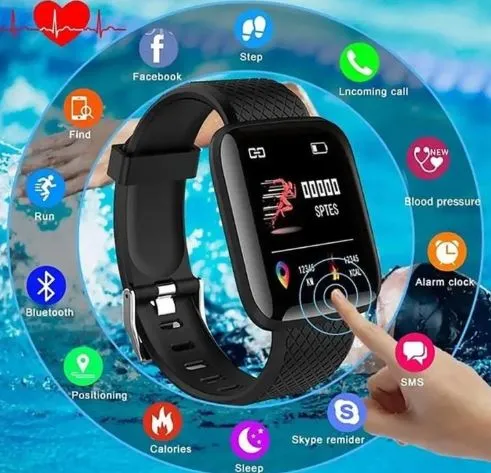
Watch Touch Screen With Bluetooth
Country Wise Scholarships
🇵🇰
Pakistan's Scholarships
🇺🇸
USA's Scholarships
🇬🇧
UK's Scholarships
🇨🇦
Canada's Scholarships
🇨🇳
China's Scholarships
🇸🇦
Saudi Arabia's Scholarships
🇦🇪
UAE's Scholarships
🇲🇾
Malaysia's Scholarships
🇪🇺
Europe's Scholarships
🇰🇷
South Korea's Scholarships
See More
Rs. 5,994
Buy Now
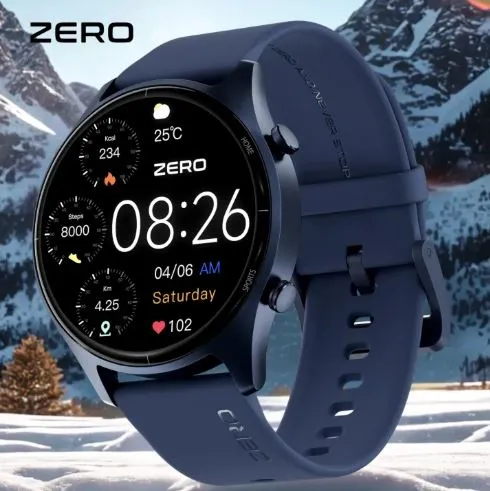
Zero® ICON Smartwatch
Online Free Quiz
MDCAT Past Papers
MDCAT Practice Test
AFNS Intelligence Test
ISSB Intelligence Test
View All Quizzes →
Follow Us
Facebook
YouTube
WhatsApp
Instagram
Stay updated with latest news & updates
Aggregate Calculator
Calculate your MDCAT aggregate for MBBS admissions
Calculate Now →