Introduction
The ongoing conflict between Iran and Israel has created unprecedented challenges for international students pursuing their education in the Islamic Republic. As missile attacks and military tensions escalate, thousands of foreign students have been forced to make difficult decisions about their safety, their studies, and their futures. This crisis has disrupted academic lives, created financial hardships, and raised serious questions about the stability of international education in conflict zones.
The war has transformed what was once a promising educational destination into a zone of uncertainty and danger for students from Pakistan, India, Iraq, Afghanistan, and numerous other countries. Understanding the scale of this exodus, the reasons behind it, and its long-term implications is essential for students, educators, and policymakers alike. Pakistani students affected by this crisis should explore alternative scholarships to continue their education in safer environments.
Number of International Students in Iran
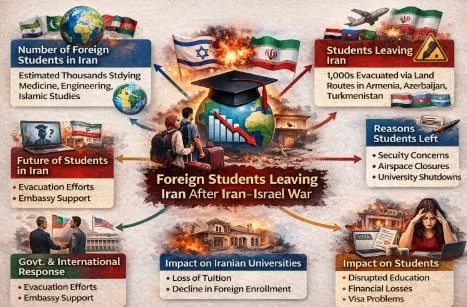
Before the conflict escalated, Iran had become an increasingly popular destination for international students, particularly those seeking affordable medical education and specialized Islamic studies. According to available estimates, approximately 50,000 to 70,000 foreign students were enrolled in Iranian universities at the time the war intensified. These students came from diverse backgrounds and countries, drawn by Iran's relatively low tuition costs and the quality of its academic programs.
Pakistan has historically been one of the largest sources of international students for Iran, with thousands of Pakistani students pursuing medical degrees (MBBS), engineering programs, and Islamic studies at various Iranian universities. Students from Iraq, Afghanistan, and India also formed significant contingents, alongside smaller numbers from African countries such as Nigeria, Senegal, and Tanzania. Popular fields of study included medicine and health sciences, engineering and technology, and Islamic studies and theology, which have long been strengths of Iranian higher education.
For Pakistani students considering international education, it's important to research stable alternatives through admissions in pakistan or other peaceful countries.
Students Leaving Iran
As the conflict intensified, a mass exodus of international students began. Estimates suggest that more than 60% of foreign students have either left Iran or are in the process of leaving, creating one of the largest student displacement crises in recent years. Pakistani students, being one of the largest groups, have been at the forefront of this evacuation, with thousands returning home through various means.
Countries including Pakistan, India, and Iraq launched emergency evacuation efforts to bring their citizens home safely. Students traveled through neighboring countries such as Turkey, Armenia, and the United Arab Emirates when direct flights were canceled or airspace restrictions made travel impossible. The evacuation operations involved coordination between embassies, airlines, and immigration authorities to facilitate safe passage for thousands of young people whose education was suddenly interrupted.
For students now seeking to continue their studies, exploring scholarships in pakistan can provide local alternatives during this uncertain period.
Reasons Students Left
The decision to leave Iran was not taken lightly by most international students, but several compelling factors made departure necessary for safety and well-being. Security concerns topped the list, as missile attacks and the threat of wider regional conflict made daily life unpredictable and dangerous. Students reported hearing explosions, seeing military activity, and feeling constant anxiety about their safety.
Airspace restrictions and flight cancellations created additional urgency, as students feared being trapped in Iran without means to return home if the situation deteriorated further. Many universities in Iran suspended classes or shifted to emergency online learning, leaving students without clear academic direction. Government advisories from home countries, including Pakistan's official warnings against travel to Iran and recommendations for citizens to leave, provided the final push for many students to make the difficult decision to abandon their studies mid-semester.
Medical and engineering students, who had invested years in their programs, faced particularly agonizing choices about whether to stay and complete their degrees or prioritize their safety. Students affected by this crisis may find new opportunities through medical colleges in pakistan or other institutions.
Impact on Students
The impact on students who have left Iran is profound and multifaceted, affecting every aspect of their academic and personal lives. Education has been abruptly interrupted, with students uncertain whether their completed coursework will transfer, whether they can continue their studies elsewhere, or when they might be able to return to Iran. Final-year medical students, in particular, face uncertainty about their degrees and their ability to practice medicine.
Financial losses are significant, as many students paid tuition fees for semesters they cannot complete and lost money on accommodation, books, and living expenses. Travel costs for emergency evacuation added additional financial burden. Mental stress and uncertainty have affected nearly every evacuee, with students reporting anxiety, depression, and difficulty focusing on any academic work amid the chaos.
Visa and travel problems continue to plague students even after leaving Iran, with many facing complications in obtaining new visas, transferring their student status, or planning their next steps. Delay in degrees and exams means that graduation timelines are pushed back by months or even years, affecting career plans and future opportunities.
For students seeking to restart their education, exploring scholarships in europe or scholarships in canada may provide new pathways forward.
Impact on Iranian Universities
Iranian universities have suffered tremendously from the exodus of international students, creating both academic and economic challenges. The sudden departure of thousands of fee-paying students has created significant budget shortfalls for institutions that relied on international tuition to supplement their operations. This economic loss comes at a time when universities are already struggling with the broader economic impacts of sanctions and conflict.
Reduced international student enrollment has diminished the diversity and global perspective that foreign students bring to Iranian campuses. Classrooms that once hosted students from multiple countries now sit empty, and research collaborations that depended on international participation have been disrupted or abandoned. The loss of research partnerships with institutions in Pakistan, India, and other countries represents a long-term setback for Iranian science and scholarship.
For Pakistani students considering future international study, it's essential to research the stability of host countries through admissions in pakistan and consult official travel advisories.
Government and International Response
Governments across the region have mounted significant responses to the crisis facing their students in Iran. Pakistan's government launched evacuation operations, working with airlines and border authorities to bring students home safely. Diplomatic support included establishing helplines, coordinating with Iranian authorities, and providing emergency travel documents for students who needed them.
Assistance from embassies proved crucial for students navigating the complex logistics of emergency departure. Embassy staff worked around the clock to process paperwork, arrange transportation, and provide guidance to anxious students and their families. International organizations also offered support, though their capacity was limited by the challenging security situation.
Students who have returned home may find support through scholarships and educational guidance services offered by their home countries.
Future of International Students in Iran
The future of international education in Iran remains highly uncertain as the conflict continues with no clear resolution in sight. The question of whether students will return after the conflict depends heavily on how long the war lasts and what guarantees can be provided for their safety. Many students who have invested years in their degrees may feel compelled to return if possible, while newer applicants may reconsider Iran entirely.
A significant decline in foreign admissions to Iranian universities appears likely, as prospective students and their families weigh the risks of studying in a conflict zone against the benefits of Iranian education. Countries that were major sources of students, including Pakistan and India, may see shifts toward alternative destinations for medical and engineering education.
Some Iranian universities have shifted to offering online education to continue serving their international student population, though the quality and recognition of such programs remain uncertain. The long-term reputation of Iranian higher education may suffer lasting damage from this crisis.
For students seeking stable educational environments, exploring scholarships in usa or scholarships in australia can provide alternatives that prioritize student safety.
Conclusion
The Iran-Israel war has created a profound crisis for international students who chose Iran as their educational destination, disrupting thousands of academic careers and creating uncertainty about the future. Pakistani students, who formed one of the largest contingents, have been particularly affected, with many forced to abandon years of study and return home under difficult circumstances.
This crisis serves as a stark reminder of how quickly geopolitical conflicts can upend educational plans and the importance of considering political stability when choosing study destinations. It also highlights the need for robust government support systems for students abroad and the importance of international cooperation in protecting students during conflicts.
As we look to the future, the hope is for stability to return to the region so that students can resume their educational pursuits safely. In the meantime, affected students need support in transferring credits, finding alternative programs, and recovering from the financial and emotional toll of this experience. The international community must work together to ensure that education remains a path to opportunity, not a casualty of war.