Introduction
The ongoing conflict between Iran and Israel has sent shockwaves across the Middle East and beyond, affecting not only geopolitical stability but also the global education system in profound ways. Wars and armed conflicts have always disrupted educational progress, and the current situation is no different. Students, researchers, and educational institutions across the region and around the world are feeling the effects of this prolonged tension. As the situation continues to evolve, it becomes increasingly important to understand how such conflicts impact education and what measures can be taken to mitigate these effects for students seeking academic opportunities.
The Iran-Israel war represents a significant escalation in regional tensions that affects millions of students, from primary school children to doctoral researchers. Pakistani students planning to study abroad should also explore various scholarships as alternatives to conflict-affected regions while monitoring the situation closely.
Disruption of Academic Calendars and Learning
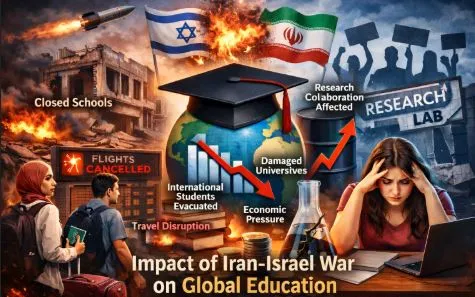
In conflict-affected regions, schools and universities may close temporarily or shift to online classes for safety reasons, causing significant delays in exams and academic calendars. Students in Iran, Israel, and neighboring countries face uncertainty about when they can safely return to classrooms and resume their normal educational routines. This disruption is particularly challenging for students in their final years of secondary school who are preparing for crucial university entrance examinations.
The shift to emergency online learning, while necessary for safety, often lacks the quality and engagement of in-person instruction. Students without reliable internet access or appropriate technology at home are disproportionately affected, widening existing educational inequalities. For students considering higher education options, checking admissions in pakistan might provide more stable alternatives during this period of regional uncertainty.
Damage to Educational Infrastructure
Military actions can cause direct damage to educational infrastructure, including schools, universities, laboratories, and research centers. Such damage not only disrupts current learning but also sets back scientific progress for years, as rebuilding requires significant time and financial resources. Research institutions that have taken decades to build may be destroyed in moments, along with irreplaceable equipment, libraries, and research data.
The destruction of educational infrastructure has long-term consequences for a country's development and its ability to produce skilled professionals. When universities are damaged or destroyed, an entire generation of students may miss out on quality higher education. Students affected by such disruptions might need to explore admissions in punjab or other regions to continue their studies uninterrupted.
Impact on International Students
International students studying in Iran, Israel, or neighboring countries face particularly challenging circumstances during the conflict. Many may face travel restrictions that prevent them from returning home or from returning to their studies after breaks. Some students may need to be evacuated for their safety, causing abrupt interruptions in their degree programs and potentially delaying their graduation by months or even years.
Universities hosting international students must navigate complex visa issues, safety protocols, and academic accommodations while under significant pressure. The psychological stress of being in a conflict zone while far from family support systems can be overwhelming for young students. For those seeking alternative study destinations, exploring scholarships in europe or scholarships in canada may provide safer options.
Economic Instability and Education Funding
Wars create significant economic instability as governments redirect resources from social services to military spending. Education budgets are often among the first to be cut during times of conflict, leading to reduced funding for public schools and universities. This reduction in funding can result in larger class sizes, fewer resources for students, lower quality of education, and reduced access to scholarships and financial aid.
As governments face increased military expenditures and decreased tax revenues due to economic disruption, students may find that previously available educational opportunities disappear. University tuition fees may increase as institutions try to compensate for reduced government funding, making education less accessible for students from lower-income families. Students requiring financial assistance should explore scholarships in pakistan and other funding sources to support their education.
Psychological Impact on Students
Living under the threat of conflict creates significant psychological stress and anxiety for students, which directly affects their ability to learn and concentrate. Children and young adults in conflict zones may experience trauma, fear, and uncertainty that makes focusing on studies extremely difficult. The mental health impacts of war can persist long after the conflict ends, affecting students' educational trajectories and life outcomes.
Universities and schools in affected regions must allocate resources to mental health support services, counseling, and trauma-informed teaching approaches. However, these services are often stretched thin during times of crisis when they are most needed. Students experiencing such challenges may benefit from exploring educational opportunities in more stable environments through admissions in islamabad or other peaceful regions.
Decline in International Research Collaboration
Scientific progress relies heavily on international collaboration, with researchers across borders working together on shared challenges. Political tensions and sanctions resulting from the conflict can severely disrupt these collaborations, as researchers may be unable to travel, communicate freely, or share data across borders. Joint research projects may be abandoned, and decades of collaborative work can be lost.
Academic journals and conferences may become politicized, and researchers from affected countries may face discrimination or exclusion from international scientific communities. This isolation slows scientific progress not only in the affected countries but globally, as the world loses access to the expertise and perspectives of scholars from the region. Students interested in research careers can explore research scholarships in pakistan for opportunities to contribute to science in stable environments.
Disruption of Student Exchange Programs
Student exchange programs, which are vital for cross-cultural understanding and academic development, are particularly vulnerable to geopolitical conflicts. Universities may suspend exchange agreements with institutions in conflict-affected countries, and students may have to cancel or postpone planned study abroad experiences. This disruption denies students valuable opportunities for international exposure and cultural exchange.
Exchange students already abroad when conflict escalates may need to return home immediately, leaving behind coursework, research, and friendships. The administrative and academic complications of such abrupt departures can delay graduation and create lasting academic records challenges. Students seeking international experience might consider scholarships in usa or scholarships in uk as alternative destinations with stable environments.
Impact on University Rankings and Reputation
Universities located in conflict zones often see their international rankings decline as research output decreases, international collaborations diminish, and their ability to attract top faculty and students weakens. This decline can have long-lasting effects on these institutions' reputations and their ability to recover once peace is restored. Students holding degrees from such institutions may find their qualifications viewed with skepticism by employers and graduate programs.
The brain drain accelerates as talented academics and researchers leave conflict-affected countries for safer positions abroad, further weakening local educational institutions. This loss of human capital has generational consequences for the affected countries' development. Students in Pakistan can explore medical colleges in pakistan and other local institutions that maintain stable operations.
Advice for Students to Reduce Impact
For students concerned about how the Iran-Israel conflict might affect their educational plans, several proactive steps can help mitigate potential negative impacts. First, diversify your academic options by applying to universities in multiple countries to ensure you have alternatives if your first-choice institution becomes affected by conflict. Consider applying to institutions in politically stable regions such as Pakistan, where educational institutions continue to operate normally.
Second, stay informed about travel advisories and university policies regarding international students in conflict-affected regions. Register with your embassy if you are studying abroad and maintain updated contact information so authorities can reach you in case of emergency. Keep digital copies of all important documents, including passports, visas, academic transcripts, and university correspondence, accessible from anywhere.
Third, develop flexible academic plans that allow for potential disruptions. Consider online learning options that can continue regardless of physical location, and explore universities that offer robust distance learning programs. Build a network of academic contacts across different institutions who can provide support and information if your primary university becomes inaccessible.
Fourth, prioritize your mental health by seeking counseling services if you experience anxiety or stress related to the conflict. Connect with other students facing similar challenges through support groups and online communities. Remember that your safety and well-being are more important than any academic deadline or requirement.
Finally, explore scholarship opportunities in countries with stable educational systems. Pakistani students should regularly check scholarships for opportunities that provide quality education in peaceful environments. Consider applying to universities in countries with strong diplomatic relations with your home country, as these may offer more stability during international crises.
Conclusion
The Iran-Israel war serves as a stark reminder of how geopolitical conflicts can disrupt education at all levels, from primary schools to doctoral programs. The impacts are far-reaching and long-lasting, affecting not only students and institutions directly in conflict zones but also the global academic community through disrupted collaborations and exchanges. As the situation continues to evolve, students must remain vigilant, flexible, and proactive in protecting their educational investments and futures.
While we cannot control geopolitical events, we can control how we prepare for and respond to them. By diversifying options, staying informed, prioritizing safety, and seeking stable alternatives, students can navigate even the most challenging circumstances. The pursuit of education is a fundamental human right, and it is our collective responsibility to ensure that conflicts do not permanently derail the academic aspirations of young people seeking knowledge and skills to build better futures for themselves and their communities.