
Karachi Institute of Medical Sciences - Merit, Fee 2026, Apply Detail
KIMS Karachi in a Glance
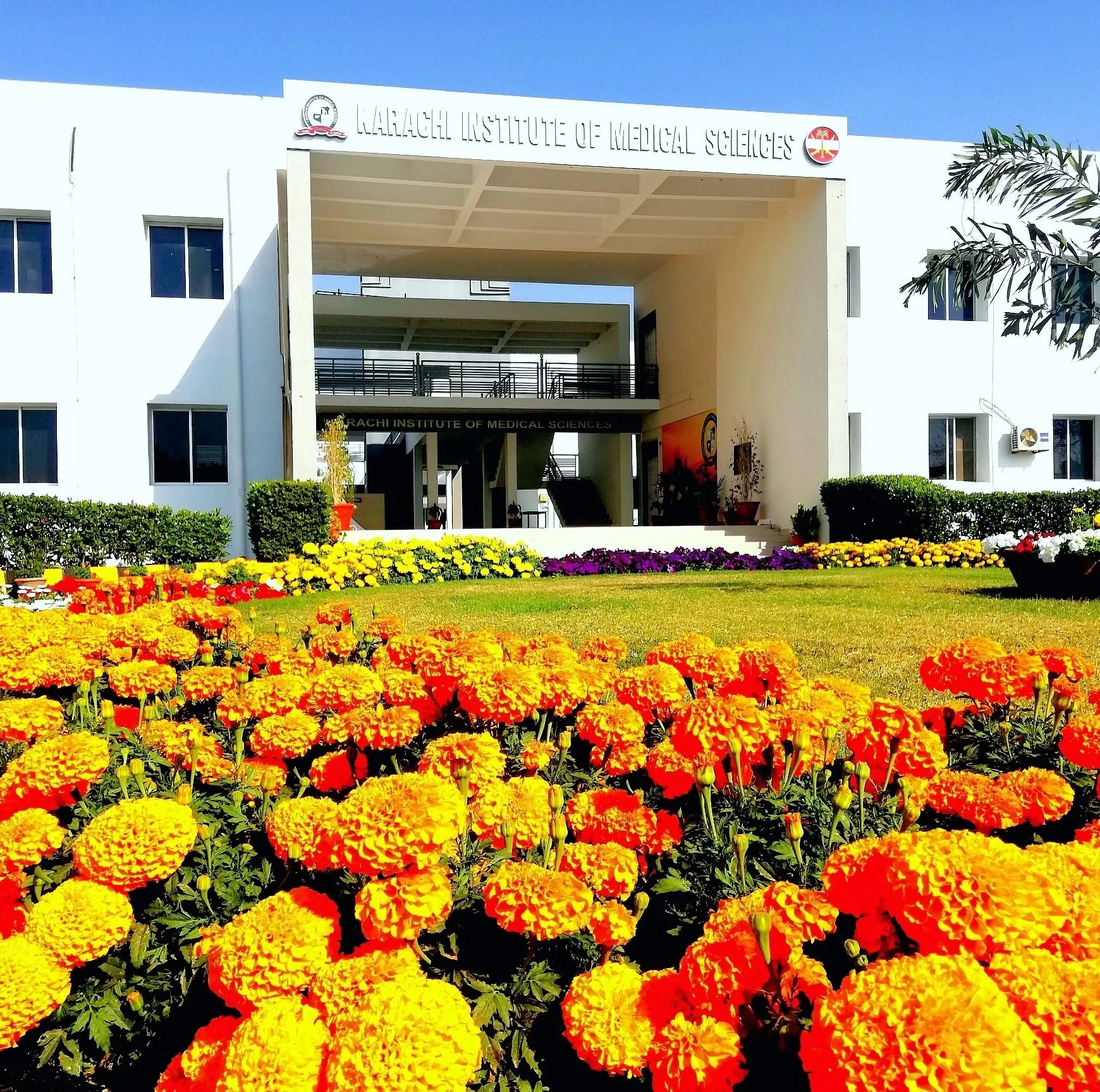
KIMS Karachi Introduction
Karachi Institute of Medical Sciences (KIMS) stands as a distinguished public sector medical college established by the Government of Sindh in the Malir district of Karachi, representing a strategic vision to decentralize quality medical education and healthcare services within Pakistan's largest metropolitan city.
Founded specifically to serve the populations of Malir, the adjoining districts, and the rural-urban fringe areas, KIMS addresses the critical need for accessible, affordable medical education while focusing on producing doctors committed to serving in public health facilities.
The institute's mission centers on providing merit-based, affordable medical education to students who will subsequently contribute to strengthening Sindh's government healthcare sector. Students exploring public sector medical college established in the malir district of karachi will find KIMS's community-focused mission particularly compelling for their professional aspirations.
Institutional Foundation and Strategic Vision
The establishment of Karachi Institute of Medical Sciences by the Government of Sindh represents a deliberate policy decision to expand medical education capacity beyond Karachi's established central institutions into peripheral and underserved areas.
Malir district, with its large population and growing healthcare needs, was identified as an ideal location for a new public sector medical college that would simultaneously address educational access and healthcare delivery challenges.
This strategic decentralization ensures that students from Malir and surrounding areas can pursue medical education close to home while developing commitment to serving the communities where they train. Those researching government medical college serving rural urban fringe areas will appreciate how KIMS's founding vision addresses both educational and healthcare access disparities.
Merit-Based Affordable Education
The institute's commitment to providing merit-based, affordable medical education ensures that talented students from diverse socioeconomic backgrounds can pursue medical careers regardless of financial means.
As a public sector institution, KIMS maintains tuition structures that are substantially lower than private colleges, reducing financial barriers while maintaining academic standards through competitive merit-based admission.
University Affiliation and Accredited Program
Karachi Institute of Medical Sciences is affiliated with Jinnah Sindh Medical University (JSMU) in Karachi, one of the province's premier public sector health sciences universities. This affiliation ensures the institute's curriculum, examinations, and academic standards align with rigorous provincial benchmarks while providing students access to university-wide resources and quality assurance mechanisms.
The five-year Bachelor of Medicine, Bachelor of Surgery (MBBS) program is fully recognized and accredited by the Pakistan Medical Commission (PMC), providing students assurance that their education meets national standards for professional practice upon graduation. Students interested in med college admission process nationwide will find KIMS's JSMU affiliation particularly valuable for degree recognition and quality assurance.
Integrated Modular Curriculum
The curriculum follows the integrated modular system mandated by Jinnah Sindh Medical University and national regulatory bodies, ensuring a comprehensive education that progresses logically from basic medical sciences to advanced clinical training.
This integrated approach helps students understand connections between foundational sciences and clinical applications, building knowledge systematically while emphasizing relevance to patient care throughout the educational journey.
Clinical Training at Sindh Government Hospital Malir
The primary and attached clinical training facility for KIMS students is the Sindh Government Hospital Malir, also known as the Sindh Government Hospital & Research Centre (SGHRC).
This public hospital is undergoing development into a major tertiary care center, with expanding departments and services that provide increasingly comprehensive clinical training opportunities. Students gain hands-on clinical experience by rotating through departments such as Medicine, Surgery, and Pediatrics, providing them with direct exposure to the healthcare needs of a large, diverse community in an authentic public hospital setting.
Public Hospital Clinical Environment
Training in a public hospital environment exposes students to the realities of healthcare delivery in Pakistan's government sector, including patient demographics, disease patterns, and resource considerations that shape clinical practice.
This experience prepares graduates for careers in public health facilities, where understanding these contextual factors proves essential for effective service. Students exploring hands-on training in public hospital setting will recognize how this authentic environment distinguishes KIMS's clinical education.
Community Health Exposure
The hospital's location serving Malir and surrounding rural-urban fringe areas ensures students encounter health conditions prevalent in these communities, building understanding of local disease epidemiology and social determinants of health. This exposure informs clinical practice with awareness of population health contexts essential for comprehensive patient care.
Faculty and Community-Oriented Education
The faculty at Karachi Institute of Medical Sciences includes full-time academic staff in basic sciences and a growing panel of clinical tutors and visiting consultants from Sindh Government Hospital Malir and other institutions.
Given the institute's location and mission, the educational approach inherently emphasizes community-oriented medical education that prepares students for practice in settings where understanding population health is as important as individual patient care.
Focus on Local Health Priorities
Training focuses on prevalent local diseases, primary healthcare challenges, and the development of practical skills required for effective service in a public sector and resource-conscious environment. Students learn to practice medicine effectively within the constraints and opportunities of Pakistan's public healthcare system, developing adaptability and problem-solving skills essential for serving diverse communities. Students interested in affordable public sector medical education in sindh will appreciate how KIMS's community-oriented approach prepares them for meaningful service.
Practical Skills Development
The curriculum emphasizes development of clinical skills directly applicable to public sector practice, including efficient patient assessment, diagnosis with available resources, and management of common conditions within public hospital protocols. This practical focus ensures graduates are ready for immediate contribution to healthcare delivery upon completing their training.
Campus Infrastructure and Facilities
The Karachi Institute of Medical Sciences campus features essential academic infrastructure designed to support comprehensive medical education. Lecture theaters equipped for effective teaching accommodate large-group instruction, while modern laboratories for basic medical sciences including Anatomy, Biochemistry, and Physiology enable hands-on exploration that reinforces theoretical learning.
A dedicated dissection hall supports anatomy instruction through direct observation, providing essential learning experiences for understanding human structure.
Library and Learning Resources
A central library supports student learning across all program years, providing access to current medical textbooks, reference materials, and academic resources. The library serves as both quiet study space and resource center where students develop skills in finding and evaluating medical information essential for evidence-based practice and lifelong learning.
Residential Accommodations
A significant feature of KIMS is the provision of hostel facilities for both male and female students, which is crucial for attracting and retaining talent from across Sindh and creating a residential academic community.
These secure, comfortable accommodations reduce logistical barriers for students relocating to Malir for their education while fostering peer relationships that support professional development. Students exploring international fundings for students worldwide may find that on-campus residence facilitates focused study and community building essential for medical education success.
Student Life and Development
Student development at Karachi Institute of Medical Sciences is fostered through the formation of academic societies, sports activities, and participation in university-level events under Jinnah Sindh Medical University. Being a newer public college, student life is closely tied to the institute's growing identity and its role in the community, creating opportunities for students to shape institutional culture while developing leadership skills.
Community Outreach Engagement
Engagement in health awareness drives and community outreach is a natural part of the student experience at KIMS, aligning with the institute's public service mandate and providing opportunities to apply learning in community settings.
These activities help students maintain connection with medicine's humanitarian mission while developing communication skills and understanding of population health challenges. Students interested in affoardable education in karachi will appreciate how these experiences complement classroom learning.
Professional Identity Formation
Through participation in academic societies and community activities, students gradually develop professional identities as physicians committed to public service, internalizing values that will guide their practice throughout careers. This formation process proves as important as technical skill development for producing doctors who will serve effectively in public health facilities.
Strategic Role in Karachi's Healthcare Landscape
Karachi Institute of Medical Sciences holds a strategic position in the healthcare map of Karachi by aiming to become a major public sector medical hub for the eastern and peripheral regions of the city. Its establishment directly addresses the need for more public medical colleges and hospitals in Karachi, where population growth has outpaced healthcare education infrastructure development.
Strengthening Government Health Sector Workforce
By producing graduates trained specifically in a public hospital environment, KIMS aims to strengthen the workforce for Sindh's government health sector, addressing chronic shortages of qualified physicians in public facilities.
Graduates who have trained in public hospitals are more likely to understand and commit to serving in these settings, directly contributing to improving healthcare access for underserved populations in the institute's catchment area. Students exploring fully funded study with european nations may pursue international training, with many returning to apply global learning in Pakistani public sector practice.
Improving Access for Underserved Populations
The institute's location in Malir and its focus on serving rural-urban fringe areas ensures that graduates are equipped to address healthcare needs of populations that have historically faced barriers to accessing quality medical care.
This focus on underserved communities aligns with public health priorities and the government's commitment to health equity.
Why Choose Karachi Institute of Medical Sciences
Alignment with Professional Goals
For students committed to serving communities through public sector healthcare, KIMS's mission and location provide philosophical alignment essential for sustained professional motivation. The institute's focus on producing doctors dedicated to public health facilities resonates with those aspiring to make meaningful differences in underserved populations while practicing within Pakistan's government healthcare system.
Career Pathways and Public Sector Impact
Graduates of Karachi Institute of Medical Sciences emerge prepared for careers in public health facilities across Sindh, where their training in community-oriented medicine and public hospital practice positions them for immediate contribution. Many will serve in Malir and surrounding areas, directly addressing healthcare needs in the communities where they trained while strengthening government health sector capacity.
Contribution to Healthcare Access
KIMS fulfills its mission through graduates who serve in public hospitals and health facilities, improving healthcare access for populations that have historically faced barriers to quality medical care. The institute's strategic location ensures that its impact is concentrated in areas of greatest need, where additional physicians can significantly improve health outcomes for underserved communities.
Conclusion
Karachi Institute of Medical Sciences Malir represents strategic public sector investment in medical education infrastructure designed to serve Karachi's eastern and peripheral regions while strengthening the government healthcare workforce.
Through its JSMU-affiliated MBBS program, clinical training at Sindh Government Hospital Malir, community-oriented educational approach, modern campus facilities, and focus on producing doctors committed to public service, KIMS prepares graduates for meaningful careers addressing healthcare needs in underserved populations.
For students seeking affordable, quality medical education within a public sector framework that emphasizes service to communities, KIMS offers an institution where academic excellence, practical training, and public health mission converge in preparation for serving humanity through medicine in the settings where physicians are needed most.
KIMS MBBS Fee Structure
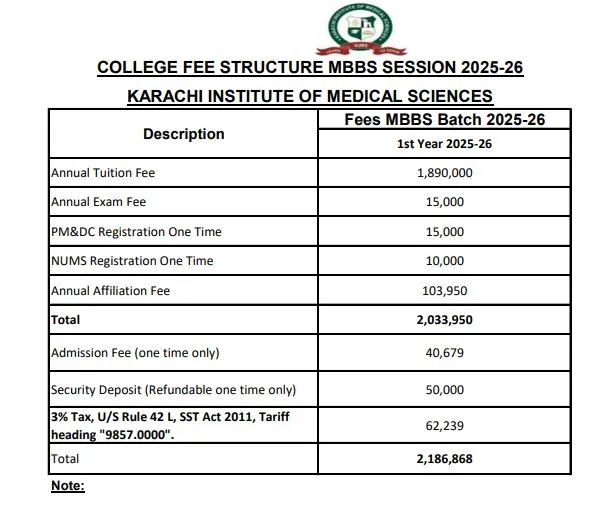
Note: The Pakistan Medical and Dental Council (PM&DC) has issued an official tuition fee alert for medical and dental colleges following recommendations by the Medical Education Committee constituted by the Prime Minister of Pakistan. For the academic session 2024–25, the tuition fee, including all ancillary charges, has been capped at PKR 1.8 million and will remain unchanged. For the 2025–26 session, a 5% increase has been approved, fixing the fee at PKR 1.89 million. Students and parents are advised not to pay fees beyond these limits, and any violations can be reported through the PM&DC complaint portal.
KIMS College Video
Watch video about Karachi Institute of Medical Sciences Malir Karachi (KIMS) for more information about the college facilities, campus, and admission process.
Frequently Asked Questions about KIMS
Is KIMS a government or private medical college?
Where is KIMS located?
How many MBBS seats are available at KIMS for admission each year?
Which teaching hospital is associated with KIMS?
📋 KIMS Admission Requirements
MDCAT
⚡ Subject Breakdown:
- Biology: 81 MCQs
- Chemistry: 54 MCQs
- Physics: 36 MCQs
- English: 18 MCQs
- Logical Reasoning: 11 MCQs
Merit Formula: Typically, the aggregate is calculated as: (MDCAT × 50%) + (FSc × 40%) + (Matric × 10%). However, the respective medical or dental college may revise its merit calculation formula or admission criteria from time to time. Please confirm the official criteria before applying.
MDCAT Subject Wise - Chapter Wise Free Quizzes
Biology
Acellular Life (51 MCQs)
Bioenergetics (48 MCQs)
Biological Molecules (49 MCQs)
Biotechnology (50 MCQs)
Cell Structure and Function (49 MCQs)
Circulation (48 MCQs)
Coordination and Control (50 MCQs)
Digestion (48 MCQs)
Enzymes (48 MCQs)
Evolution (45 MCQs)
Homeostasis (48 MCQs)
Immunity (50 MCQs)
Inheritance (47 MCQs)
Reproduction (48 MCQs)
Respiration (46 MCQs)
Support and Movement (52 MCQs)
Chemistry
Alcohols and Phenols (51 MCQs)
Aldehydes and Ketones (50 MCQs)
Alkyl Halides (51 MCQs)
Atomic Structure (50 MCQs)
Carboxylic Acids (52 MCQs)
Chemical Bonding (51 MCQs)
Chemical Equilibrium (51 MCQs)
Chemistry of Hydrocarbons (51 MCQs)
Electrochemistry (51 MCQs)
Fundamental Principles of Organic Chemistry (51 MCQs)
Gases (50 MCQs)
Industrial Chemistry (51 MCQs)
Intro of Fundamental Concept of Chemistry (50 MCQs)
Liquids (50 MCQs)
Macro Molecules (52 MCQs)
Reaction Kinetics (51 MCQs)
Reading and Thinking (1 MCQs)
S and P Block Elements (50 MCQs)
Solids (51 MCQs)
Thermo Chemistry (51 MCQs)
Transition Elements (50 MCQs)
English
Formal and Lexical Aspect (100 MCQs)
Reading and Thinking (100 MCQs)
Writing Skills (102 MCQs)
Logical Reasoning
Cause and Effect (60 MCQs)
Course of Action (58 MCQs)
Critical Thinking (60 MCQs)
Letter and Symbols Series (66 MCQs)
Logical Deductions (60 MCQs)
Logical Problems (75 MCQs)
Physics
Alternating Current (62 MCQs)
Atomic Spectra (63 MCQs)
Current Electricity (62 MCQs)
Dawn of Modern Physics (65 MCQs)
Electromagnetic Induction (120 MCQs)
Electromagnetism (68 MCQs)
Electronics (62 MCQs)
Electrostatics (65 MCQs)
Fluid Dynamics (62 MCQs)
Forces and Motion (79 MCQs)
Nuclear Physics (64 MCQs)
Rotational and Circular Motion (69 MCQs)
Thermodynamics (64 MCQs)
Vector and Equilibrium (69 MCQs)
Waves (70 MCQs)
Work and Energy (70 MCQs)
- Real Exam Pattern
- According to Latest Syllabus
- Instant Result - Stats
- Ads Free Environment
- Affordable Price
Quick Links
Latest Admissions
Popular Medical Colleges
Latest Blog Posts
HEC Law Admission Test LAT || Complete Guide
Complete guide to HEC LAT for LLB admissions. Eligibility criteria, test pattern...
NTS GAT Subject Entry Test || Complete Guide
Complete guide to NTS GAT Subject for PhD admissions. Eligibility criteria, test...
